
'We are not able to manufacture even low-end products as cheaply as China.' 'We are not buying Chinese goods today out of any love for China.'

"The central fiscal situation has improved but several underlying fiscal pressures are not entirely evident in the numbers," Reddy said at an event organised by the National Institute of Public Finance and Policy. In 2008-09, the Centre has budgeted to cut fiscal deficit to 2.5 per cent of GDP from 3.1 per cent in 2007-08.

The World Bank has appointed Indermit Gill, an Indian national, chief economist and senior vice-president for development economics at the multilateral development bank. "Indermit Gill brings to this role a combination of leadership, invaluable expertise and practical experience working with country governments on macroeconomic imbalances, growth, poverty, institutions, conflict, and climate change," World Bank President David Malpass said in a statement. His appointment will be effective September 1, 2022.

Expenditure on health in India is at a global low of 1.2% of GDP.

'An era of fiscal pessimism is setting in, which, if not countered intellectually, is going to have the same effect as export pessimism has had,' notes T C A Srinivasa Raghavan.

The finance minister continues to be backed by the same policy team in charting out the broad strategy as in the few earlier Budgets.

The US Trade Representative noted that India's average applied tariff rate stood at 17% per cent, the highest of any major world economy.

'The Budget needs to focus more on social welfare schemes.'

India's economy is not like Western ones, and thus needs restrained fiscal policy even during a recession, says Ajay Shah.

What stood out in his 15-year journey as a member of the political executive at the Centre was his glowing record as India's most successful and effective finance minister. Both as prime minister and finance minister, he understood the importance of gradualism, except when the economy or the polity was in a crisis.

Forty-five specialists will soon be joining key posts of joint secretaries, directors and deputy secretaries in different central ministries as part of the Modi government's ambitious plan to infuse fresh talent to further improve ease of governance.

In June, Sensex went up 6.6% and Nifty 6.9%, their best monthly gains since December 2023.

India has joined global efforts to combat global tax evasion.

Among possible new members, former chief economic advisor Arvind Virmani's name is doing the rounds.
.jpg)
The Finance Ministry had set a time period of 18 months, which expired last year on August 21, for completion of the study.

Rumours in the bureaucracy on his successor include the names of Sajjid Chinoy of JP Morgan, Rathin Roy of the National Institute of Public Finance and Policy, Neelkanth Mishra of Credit Suisse and the principal economic advisor, Sanjeev Sanyal.

The National Informatics Centre uses AI to automate document analysis and detect fraud in government departments.

The United Kingdom extracted USD 64.82 trillion from India over a century of colonialism between 1765 and 1900 and USD 33.8 trillion of this went to the richest 10 per cent -- enough money to carpet London in notes of 50 British pound almost four times over.

Households are likely to remain the primary net lenders to the economy in the coming decades.

The government is set to ask PSBs to expeditiously introduce repo-rate linked products "to step up affordable credit".
.jpg)
The policy will be announced shortly, Minister of State for Communications and IT Milind Deora said on Monday.

India maintained 43rd rank on an annual World Competitiveness Index compiled by the Institute for Management Development (IMD) that examined the impact of COVID-19 on economies around the world this year. The 64-nation list was led by Switzerland, while Sweden has moved up to the second position (from sixth last year), Denmark has lost one place to rank third, the Netherlands has retained its fourth place and Singapore has slipped to the fifth place (from first in 2020). At eighth, Taiwan reached the top-10 for the first time since the ranking began 33 years ago (moving up from 11th last year).

'When so many young Baloch men and women are willingly volunteering as fighters and even suicide bombers.'

Citing national security and confidentiality clauses, the Finance Ministry has declined to disclose information on exchange of correspondence among India, Swiss and German authorities in connection with the black money probe.

'The prime minister's comment on 'revdi culture' was welcome. But I am disappointed he did not follow up on that.' 'All political parties, including the BJP, have been guilty of this.' 'Now, Modi's guarantees, the Congress's 'nyay' path and both ruling and Opposition parties are vying with each other for freebies in my home state Andhra Pradesh.'

United States Vice President-elect Kamala Harris has named her Chief of Staff, Domestic Policy Advisor and National Security Advisor -- an all-women team -- which she said has the experience to hit the ground from day one.

The Union Budget on Wednesday outlined several initiatives to drive India's technology agenda and boost digital infrastructure, including new centres of excellence for artificial intelligence, National Data Governance Policy, and Entity DigiLocker.
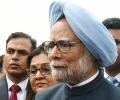
Condolences have poured in from across the globe, including from the United States, Canada and Sri Lanka following the demise of former Prime Minister Manmohan Singh.

Sajjid Chenoy, India economist at JP Morgan is the new part-time member.

Wealth, which can broadly be a measure of assets held as opposed to income earned, is unequally distributed.

The finance ministry has directed all state-owned banks to review their gold loan portfolio as instances of non-compliance with regulatory norms have been noticed by the government. The Department of Financial Services (DFS) in a communication addressed to heads of public sector banks has asked them to look at their system and processes related to gold loan. "We have asked banks to undertake comprehensive review of the gold loan business," financial services secretary Vivek Joshi told PTI.

'No Budget has so far has addressed the issue of the government's abysmal productivity of capital spending, improving which will be the big game changer. 'But, the government's tight lock on businesses, banks, education, and even essential services like transportation and large parts of infrastructure and healthcare is destroying capital year after year,' points out Debashis Basu.

The World Bank has approved loans totalling $1.75 billion (about Rs 13,834.54 crore) to fund India's PM Ayushman Bharat scheme and private investment to boost the economic growth. Of the total loan, $1 billion will go towards the health sector, while the rest $750 million will be in the form of development policy loan (DPL) to fill the financing gaps through private sector investment in the economy. The World Bank Board of Executive Directors approved two complementary loans of $500 million each to support and enhance India's health sector.

Budget speeches have been replete with incomprehensible and even hilarious statements, says Rathin Roy.

Stocks of public sector undertakings (PSUs) have been on fire in the past year as investors cheered an improvement in key operating metrics and embraced counters of these state-owned enterprises, analysts suggest. The S&P BSE PSU Index has gained over 90 per cent in the past year, rising much higher than the S&P BSE Sensex, which has rose nearly 19 per cent during this period, according to ACE Equity data. The BSE PSU Index, reports show, has delivered a compound annual growth rate (CAGR) of 28 per cent (including dividends reinvestments) over five years and risen by almost 60 per cent in the past year.

'In a serious fiscal situation like this, an ostrich-like focus on annual budgeting, event management and defensive rhetoric will only make matters worse,' warns Rathin Roy.

The studies found that sectors with the highest unaccounted income included real estate, mining, pharmaceuticals, pan masala, gutkka and tobacco, bullion and commodity markets, film industry, educational institutes and professionals.

'If such a practice were feasible, every state would seek additional funds, posing a significant risk to the overall health of the economy.'

'Event management can distract from, but not permanently mask, execution failures,' points out Rathin Roy, director, National Institute of Public Finance and Policy.
